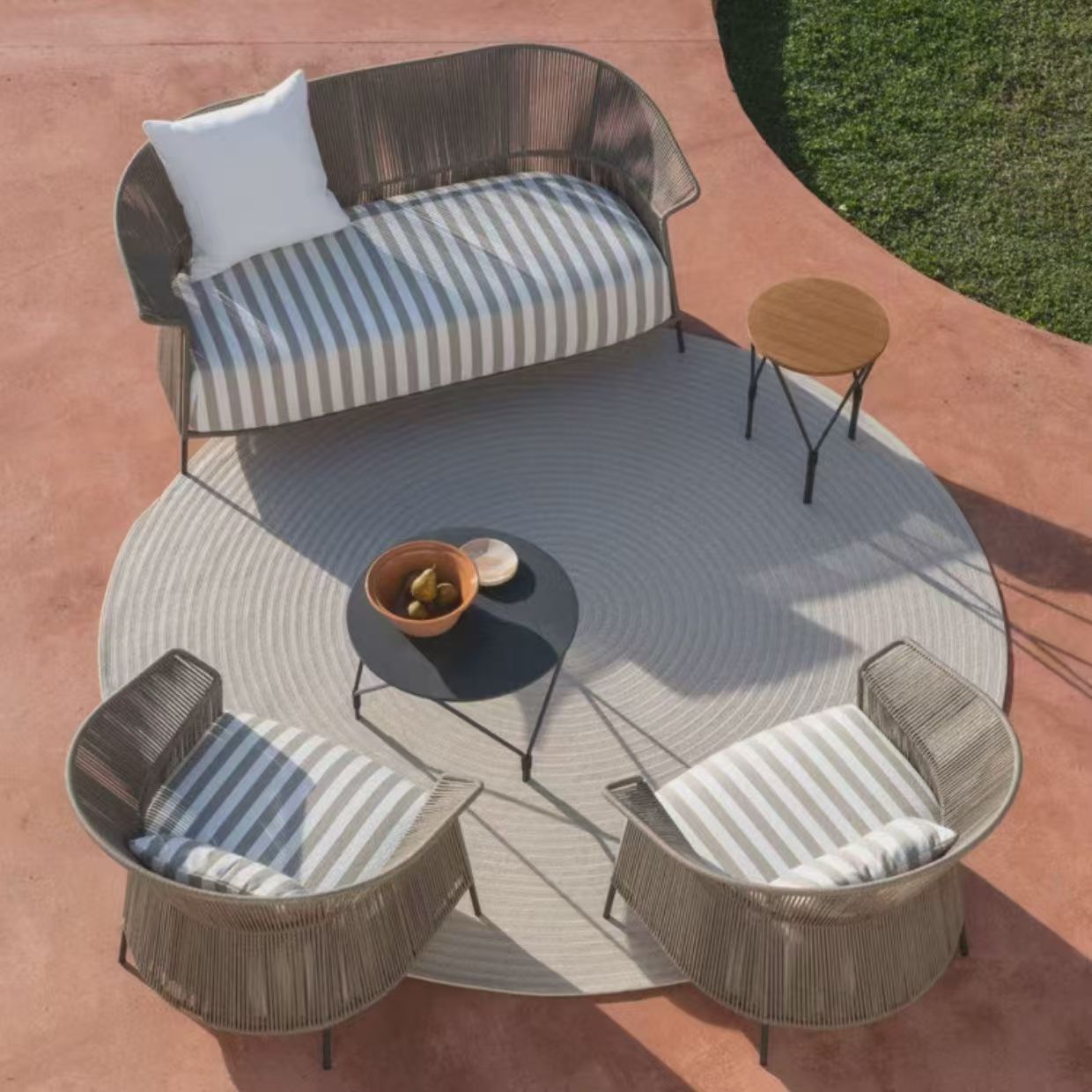
Have you ever noticed a counterintuitive phenomenon? Many people deliberately purchase outdoor cushions labeled ultra-waterproof. The fabric looks perfectly dry right after rain, seeming great in quality. However, mold spots and stuffy odors appear soon after use. Neither long-time sun exposure nor thorough cleaning can completely remove the internal musty smell, leaving the cushions unusable and requiring replacement. Most people attribute this problem to dampness or improper maintenance. But with years of industry experience, I want to reveal a rarely explored core truth: mold growth on outdoor cushions is rarely caused by moisture itself, but by excessive waterproofing design. This is the most hidden pitfall in outdoor soft furnishing selection.
Most consumers hold a fixed mindset: the stronger the waterproof performance of outdoor fabric, the better. However, in the industry, we clearly know that most low-cost waterproof outdoor cushions adopt a simple PU coating sealing process. Manufacturers apply a thick sealing adhesive on the back of the fabric to block all fiber pores. Admittedly, this process delivers visible full waterproofness with a cost-effective price, making it the core selling point for most merchants. Behind this seemingly perfect waterproof effect lies a fatal flaw: all fabric pores are completely blocked, resulting in zero air permeability.
Let’s analyze the real outdoor application scenario. Outdoor environments feature large temperature differences and high humidity. After rainfall, the sponge inner layer of cushions inevitably absorbs trace moisture; daily sitting also generates subtle water vapor from body temperature. Fabrics with breathable pores can naturally release and dissipate such moisture. In contrast, coated and fully sealed fabrics act like a vacuum wrap, trapping all moisture between the fabric surface and the sponge layer. Accumulated outdoor dust and stains further create a warm, humid, and enclosed environment — an ideal breeding ground for mold. This is the essential cause of persistent mold and odor problems.
From this, we can conclude a key rule for outdoor scenarios: complete sealed waterproofing is a pseudo-demand, while moisture permeability and quick-dry performance are the real essentials. Indoor furniture relies on tight sealing against dampness, but outdoor soft furnishings must adapt to dynamic environmental changes. Premium outdoor fabrics always strike a balanced performance: water repellent on the surface and moisture permeable from the inside. Rainwater is blocked from penetrating, while internal trapped moisture volatilizes freely, fundamentally eliminating mold growth conditions for open-air courtyard applications.
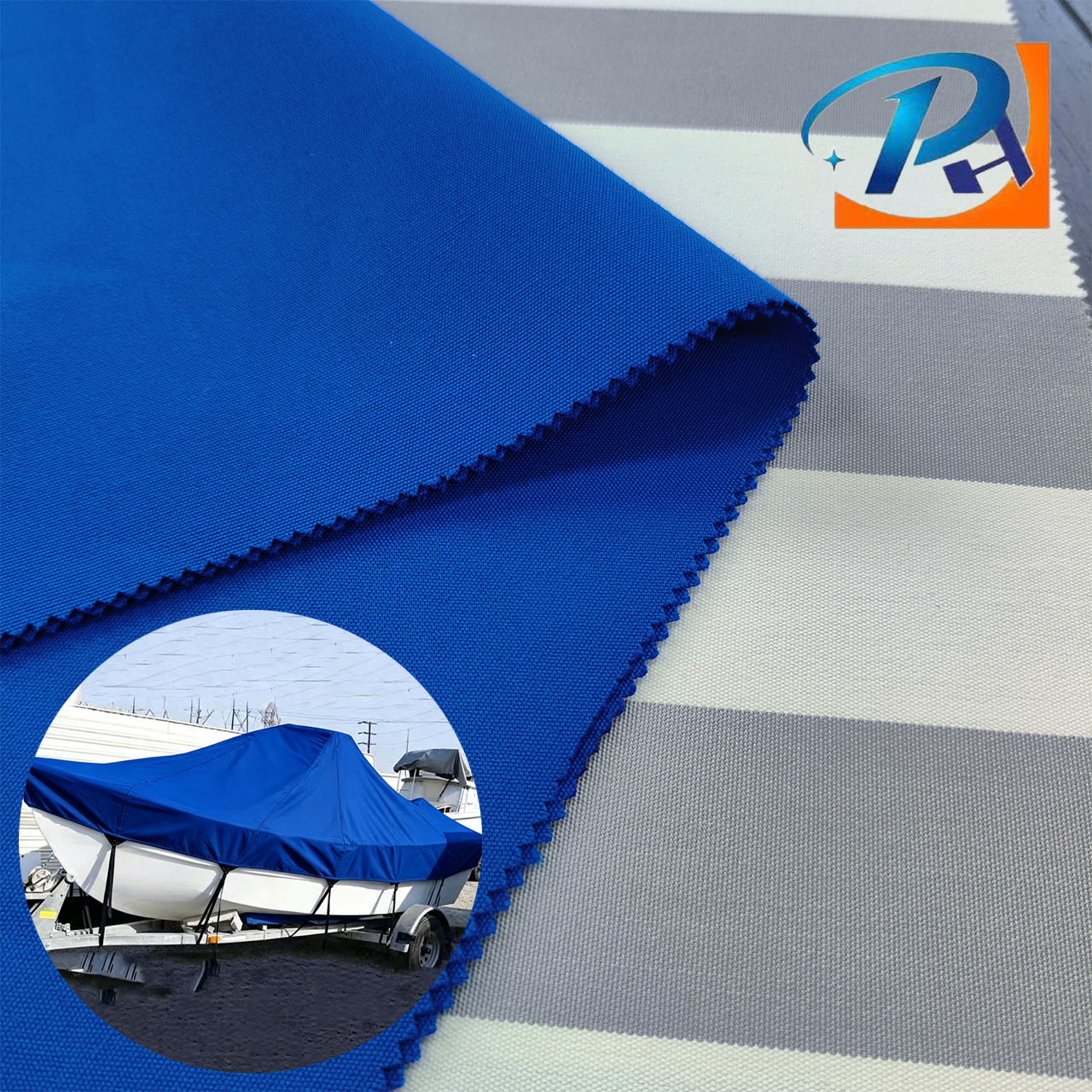
Understanding this principle helps everyone identify fabric quality without being misled by marketing hype. Having tested numerous outdoor fabrics and witnessed countless real application cases, I have found obvious differences: some cushions get moldy, smelly and peeling within half a year, while others remain clean and odorless after years of rain and sun exposure. Few fabrics can perfectly balance waterproofing and ventilation in dynamic outdoor environments, and solution dyed acrylic soft fabric is one of the most representative options. It abandons the traditional glue-coated sealing waterproof technology, and adopts professional fluorine-free waterproof additives to form a lotus-effect water-repellent surface. Rainwater slides off quickly without wetting the fabric, achieving efficient water repellency. Most importantly, this additive treatment never blocks fabric pores, completely solving the common defect of zero ventilation caused by full waterproof coating, and retaining excellent air permeability.
This ventilated and moisture-dissipating structure fundamentally avoids moisture accumulation and internal rotting. In addition, acrylic fiber features a stable and dense molecular structure, which resists the adhesion of damp bacteria. Compared with ordinary fabrics, it is far less prone to mold growth in humid outdoor conditions. The matched breathable structure allows internal moisture and sitting-generated water vapor to volatilize rapidly, double preventing mold and odor issues. Meanwhile, it abandons the stiffness and roughness of traditional outdoor fabrics, delivering soft and skin-friendly touch with no stuffy feeling during long-time sitting, suitable for all-year outdoor placement.
The solution dyeing process independently improves outdoor weather resistance, fully coloring fiber interiors to realize excellent UV resistance and aging resistance, preventing fading and cracking under long-term sun exposure. The fluorine-free water-repellent technology provides eco-friendly water repellency and durable washability without blocking breathable pores. Supported by the inherently moisture and stain-resistant properties of acrylic material, it adapts perfectly to high-humidity, high-salt and harsh scenarios such as courtyards, swimming pools and seaside environments, with far superior durability compared with conventional coated waterproof fabrics.
Choosing outdoor cushions does not require complicated parameter judgment. Simply break away from the single-minded waterproofing mindset and prioritize ventilation, quick drying and dynamic moisture resistance, and you can avoid 90% of selection pitfalls. Judging fabrics by their internal structural logic rather than commercial publicity helps you pick durable, worry-free outdoor soft furnishings and avoid frequent replacement and tedious mold cleaning.


 EN
EN
 AR
AR
 NL
NL
 FR
FR
 DE
DE
 HI
HI
 IT
IT
 JA
JA
 KO
KO
 PT
PT
 RU
RU
 ES
ES
 TL
TL
 IW
IW
 ID
ID
 VI
VI
 TH
TH
 TR
TR
 FA
FA