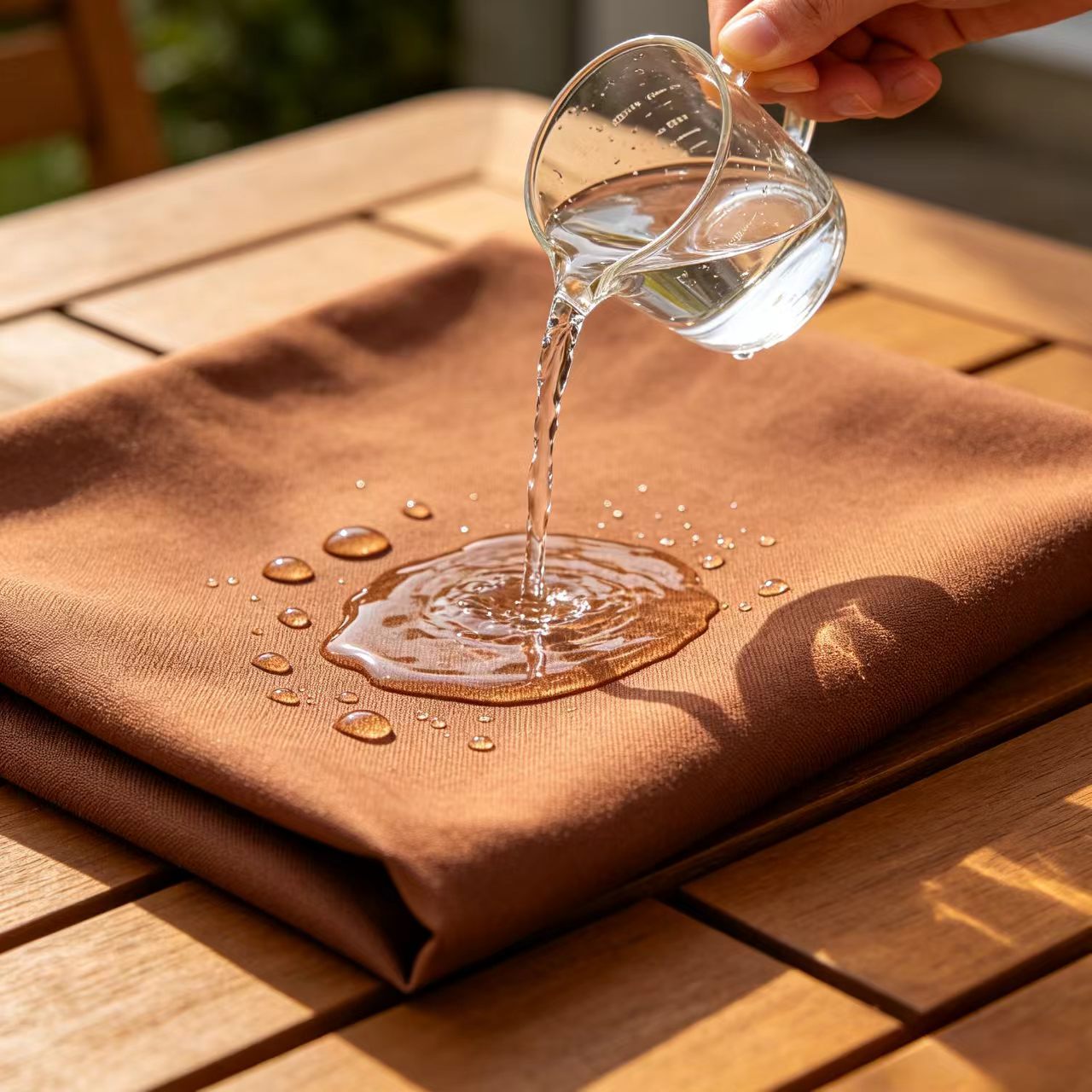
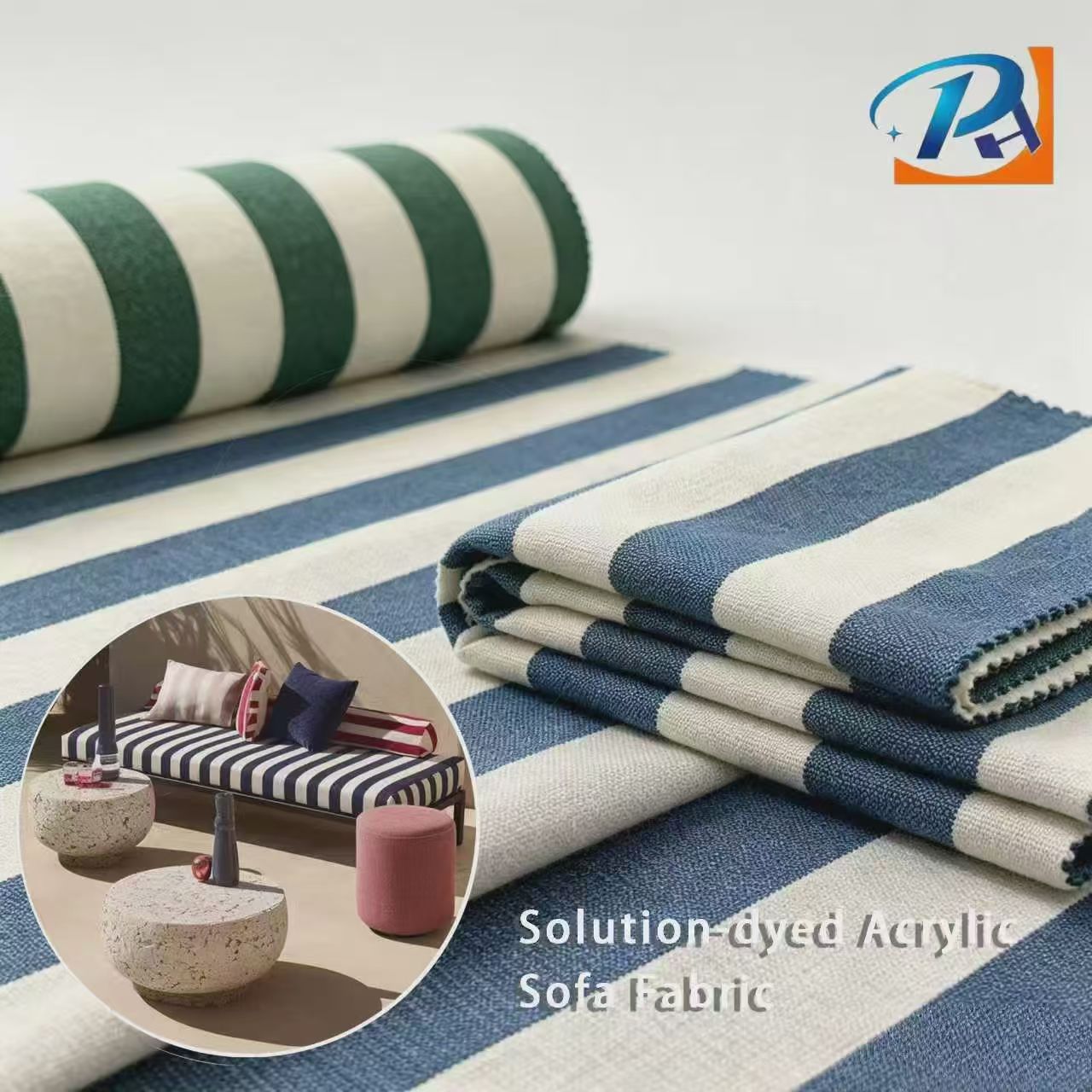
With years of experience in outdoor fabric foreign trade, I’ve clearly witnessed a shift in overseas consumers’ buying mindset.
Overseas buyers used to favor outdoor sofas in high-saturation bright colors for eye-catching displays. But in recent years, low-saturation earth tones such as oat, sand beige, misty taupe and grey-green have dominated private patios and commercial outdoor seating areas. This is not a regression in aesthetics. Instead, end customers value long-term performance. Since outdoor furniture stays exposed all year round, UV resistance, low maintenance and fewer after-sales issues matter more than short-lived visual appeal.
Many families, cafes and guesthouses overseas leave their outdoor sofas outdoors year-round with little storage protection. Intense summer UV in Europe & America, persistent high heat in the Middle East, and salt spray in coastal areas all put fabrics to the test.
High-saturation colors carry a clear drawback: they tend to develop mottling and whitening under prolonged sunlight. Overseas customers hold high standards for product appearance. Fading easily triggers complaints and returns. Simply put, bright colors work great for showroom displays, while low-saturation tones suit real outdoor conditions.
Bright colors are not completely ruled out. A common industry solution: use low-saturation fabrics as the main upholstery for large sofa cushions, and reserve bright hues only for small accent throw pillows to balance aesthetics and reduce fading risks.
The same color will deliver vastly different weather resistance on different fabrics. Here are three widely used options for reference:
One practical tip: Even with identical color codes, solution-dyed polyester, acrylic and olefin show subtle differences in tone and luster under natural daylight. For complete outdoor furnishing packages, stick to one fabric type and send samples for outdoor natural light verification to avoid color discrepancy disputes.
Global outdoor furniture sourcing priorities have shifted. Low-saturation earth tones offer a balanced solution for appearance, weather resistance and fewer after-sales headaches. Pick light low-saturation shades for mild climates, darker low-saturation tones for high-UV regions, and olefin for humid coastal projects. For foreign trade shipments, visual appeal is a bonus. Consistent durability is the key to sustainable sales.

Suzhou Ruihe Textile & Technology Co.,Ltd
Copyright © Suzhou Ruihe Textile & Technology Co.,Ltd All Rights Reserved | Blog | Privacy Policy

 EN
 AR
 NL
 FR
 DE
 HI
 IT
 JA
 KO
 PT
 RU
 ES
 TL
 IW
 ID
 VI
 TH
 TR
 FA