
 EN
 AR
 NL
 FR
 DE
 HI
 IT
 JA
 KO
 PT
 RU
 ES
 TL
 IW
 ID
 VI
 TH
 TR
 FA
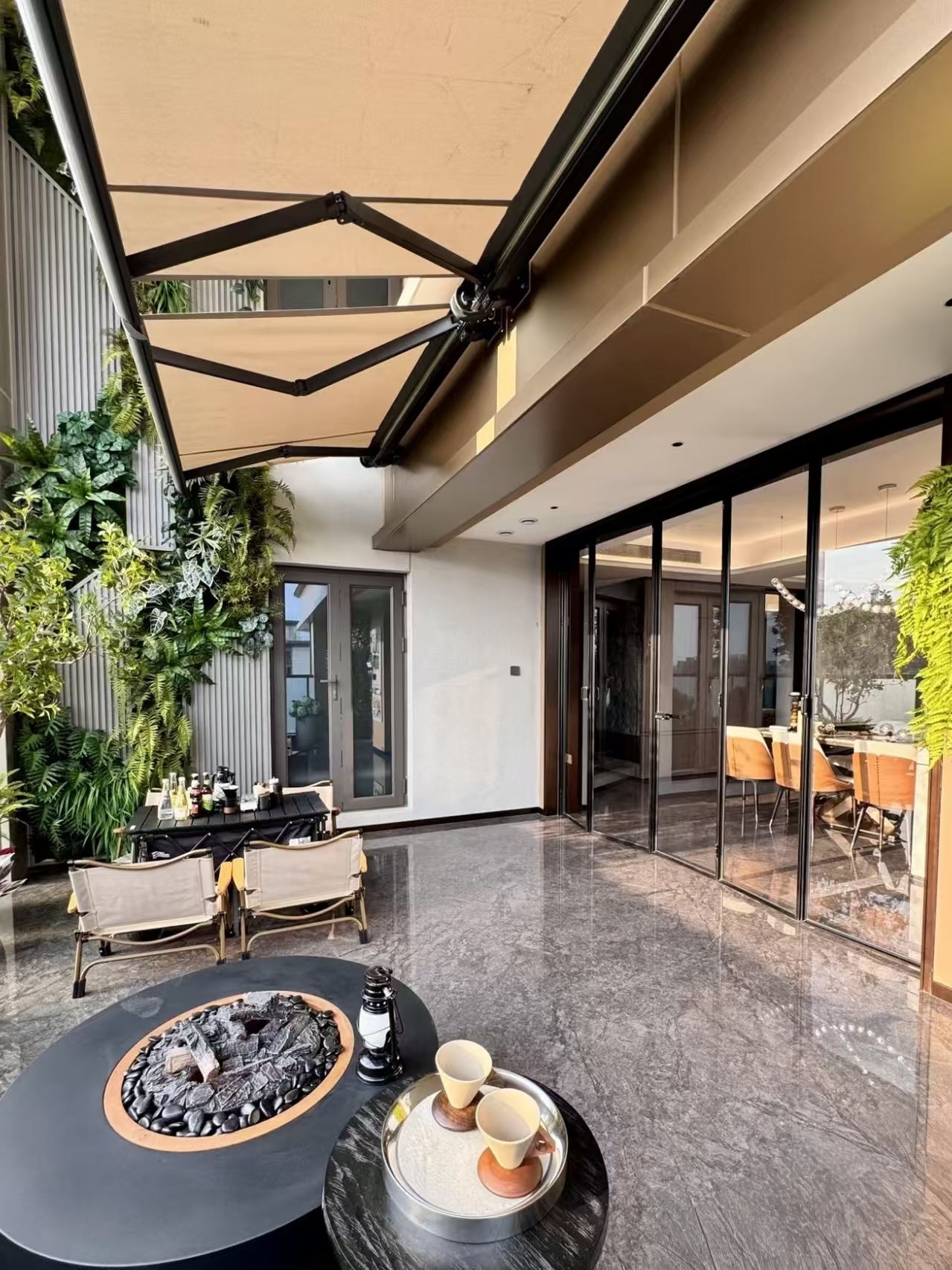
Industry veteran sharing | For awning, patio soft furnishing & campground buyers
If you work with awnings, outdoor soft furnishings or campground projects, you’ve probably run into this dilemma. Two types of fabric show nearly identical labels: Class 7-8 UV resistance, high sun fastness, fade-resistant. But ask for quotations, and there is a big price gap.
Many people take a simple shortcut: pick polyester for tight budgets, acrylic for high-end projects. Trouble comes after installation. Some awning fabric turns brittle like crispy noodles after two years of sun exposure and tears easily. Some develop patchy discoloration after several rainy seasons. Others look so cheap that a premium courtyard instantly resembles a temporary construction site.
There is no absolute winner here. It all comes down to suitability! Today we skip boring lab reports and talk about how to pick between these two popular solution-dyed fabrics.
Important note: This article only covers solution-dyed fabrics. Conventional post-dyed fabrics are inherently poor at sun resistance and are excluded from this comparison.
01 Know the basics: Different fiber foundations
Many buyers only check color swatches and ignore fiber properties — this is the root cause of most failures.
Solution-Dyed Polyester: The cost-effective champion for engineering projects Color masterbatch is mixed into molten chips during fiber spinning, instead of dyeing finished woven fabric. It features high tensile strength and excellent tear resistance, tough and durable. However, it has a weak point: repeated cycles of high temperature and rain will slowly hydrolyze the fiber and shorten its service life.
Solution-Dyed Acrylic: The aesthetic star for outdoor soft furnishing Made of polyacrylonitrile fiber. Color is locked inside the fiber during spinning as well. It has been a classic material for premium outdoor awnings for decades worldwide, with outstanding weather resistance as its core advantage. Soft hand feel and great draping performance deliver superior aesthetics. On the downside, at the same fabric weight, its tear resistance is inferior to polyester, and the price is higher.
02 Six dimensions comparison, avoid blind purchasing
Many buyers make mistakes by only focusing on the “Class 7-8 UV resistance” rating. What really determines service life and appearance of awning fabric are the following factors:
1. Color fastness to sunlight: No obvious difference in short term, time tells everything
Premium solution-dyed polyester and acrylic both perform well in short-term exposure and reach Class 7-8 UV protection. Differences emerge over long-term outdoor aging. ? Solution-Dyed Acrylic: Stable fiber structure. It fades evenly without mottled patches. Maintains good appearance after 5–10 years of outdoor exposure. ? Solution-Dyed Polyester: Looks fine in the short run. But prolonged cycles of sunlight and rain trigger hydrolysis of polyester fibers. Apart from fading, fabric becomes brittle and loses mechanical strength.
2. Visual texture: Hand feel defines outdoor aesthetics
For boutique homestays, residential patios and export orders, texture is a key competitive advantage. ? Solution-Dyed Acrylic: Matte and soft surface, delicate hand feel, elegant drape. Low-saturation color palette creates premium atmosphere, ideal for high-end courtyards. ? Solution-Dyed Polyester: Stiffer hand feel with industrial texture. Even with matte finishing, it cannot replicate the soft textile feel of acrylic, easily recognizable as engineering fabric.
3. Weather & corrosion resistance: Huge gap in coastal and rainy regions
Waterproof performance depends on surface coatings (PU, fluorine-free, Teflon etc.), while salt spray and acid resistance are determined by base fiber. ? Solution-Dyed Acrylic: Tolerant of humid and rainy conditions. It withstands acidic rain, coastal salt spray and chlorine from swimming pools with slow aging speed. ? Solution-Dyed Polyester: Works well in dry inland areas. Continuous high temperature and humidity cause hydrolysis. Coatings tend to peel off, accelerating aging and mold growth.
4. Mold resistance: An easily overlooked hidden problem
Neither fiber itself is mold-resistant. Mold protection relies on post-treatment additives. Yet fiber stability decides how long the additives last. Once polyester degrades under hot and humid conditions, coatings lift and trap moisture inside the fabric, which breeds mold. Acrylic maintains stable substrate and better coating adhesion to reduce mold risks.
5. Cost & value: Budget dictates your choice
At the same fabric weight and sun fastness grade: acrylic costs more than solution-dyed polyester. Polyester offers cost benefits for medium-short term projects. Acrylic delivers long-term durability and premium look for high-quality long-term applications.
03 Match your project to the right fabric
✅ Choose Solution-Dyed Polyester if your project meets these conditions
- Inland dry locations without salt spray or heavy persistent rainy seasons
- Limited budget, expected service life of 2–4 years
- Outdoor umbrellas, large camp canopies and tension shade structures with frequent strong winds
- Temporary commercial outdoor seating and economical campground shading projects
Tip: Select high weather-resistant polyester with ≥600h xenon test, paired with fluorine-free waterproof coating to extend service life.
✅ Choose Solution-Dyed Acrylic for these scenarios
- Coastal courtyards, poolside areas with salt spray and chlorine corrosion
- Luxury private yards, boutique homestays and trendy campgrounds where appearance is priority
- Regions with hot humid weather, no wish to replace awning fabric every few years
- High-end export orders to Europe and North America, benchmarking imported premium outdoor textiles
Tip: When using acrylic for retractable arm awnings, pick sufficient fabric weight to prevent tearing under strong winds.
04 Final thoughts
There is no universal “perfect fabric”. Only fabric suitable for your project. Prioritizing cost efficiency, wind resistance and short-term use → Solution-Dyed Polyester Prioritizing soft furnishing texture, long-term durability and harsh weather tolerance → Solution-Dyed Acrylic
Do not make fabric decisions merely based on quotations and color swatches. A professional selection should comprehensively consider local climate, expected service life, budget and aesthetic requirements.
Table of Contents
- 01 Know the basics: Different fiber foundations
-
02 Six dimensions comparison, avoid blind purchasing
- 1. Color fastness to sunlight: No obvious difference in short term, time tells everything
- 2. Visual texture: Hand feel defines outdoor aesthetics
- 3. Weather & corrosion resistance: Huge gap in coastal and rainy regions
- 4. Mold resistance: An easily overlooked hidden problem
- 5. Cost & value: Budget dictates your choice
- 03 Match your project to the right fabric
- 04 Final thoughts