I’ve been working with outdoor fabrics for many years, and one question comes up more often than any other: Why does the same type of fabric last five to six years for some people, yet fades, grows mold, cracks and chalks within just two years for me?
Many people assume fabric failure outdoors is caused solely by sunlight.
In fact, UV rays, moisture and salt spray are widely recognized in the industry as the “three big killers” of outdoor fabrics. When acting alone, they age fabric slowly. But once two or all three work together, the service life of the fabric can be cut in half.
No complicated chemical formulas today. Using plain language and relatable analogies, I will fully explain how these three culprits cause damage. I’ll also share practical guidance on material selection, protection and risk avoidance, so you can steer clear of common outdoor fabric aging pitfalls after reading this.
Many think sunlight only yellows or fades fabric, which is a superficial understanding. The real damage is severe. The fibers, waterproof coatings and resin protective layers of outdoor fabrics all feature high-molecular structures. Think of the fabric as a house, and UV rays as constant bombardment from tiny cannonballs. With nonstop exposure, these cannonballs pound the structure. The “reinforcing steel bars” (molecular chains) inside the house keep breaking. No visible damage may appear at first, but the fabric’s toughness, strength and color fastness gradually degrade.
Two main consequences of UV damage:
✅ Protection measures against UV rays
Core role: It does not destroy fabric directly, but breeds mold and accelerates aging.
If UV rays represent violent physical damage, moisture is the subtle, invisible corrosion. It is the top cause of mold growth and bottom-layer failure for 90% of outdoor furniture fabrics.
Here is a common misconception: It is not rainwater that ruins outdoor fabrics, but trapped moisture vapor. During plum rains, morning and evening dew, or in humid courtyards, invisible water vapor fills the air. Some suppliers apply extra-thick sealed coatings to achieve maximum waterproof performance. Rainwater is fully blocked, yet moisture trapped inside the fabric and cushion foam cannot escape.
Three hidden hazards of moisture:
This confirms our earlier conclusion: Fabrics with stronger, fully sealed waterproof coatings are more prone to mold.
✅ Protection measures against moisture
Core role: Triggers coating chalking and accelerates fabric failure – a nightmare unique to seaside environments.
For inland outdoor fabrics, only UV and moisture need to be tackled, supporting a service life of 5–6 years. Add salt spray at coastal sites, and the fabric enters a high-difficulty survival mode with its service life halved.
Many believe salt spray only leaves salt residue that can simply be rinsed off. This is far from the truth.
The damage mechanism of salt spray, simplified:
The end result: The surface coating chalks, whitens and sheds fine powder. White residue transfers to your hands upon touch, waterproof performance fails completely, and yarns turn brittle and crack.
Critical distinction: Whitening ≠ Fading Fading means the yarn pigment is damaged. Chalking means the coating itself is corroded. This is the primary aging issue for yacht covers and seaside awnings.
✅ Protection measures against salt spray
From analyzing the three culprits separately, we can see: ✅ Dry inland environment: UV only, slow aging, service life 5–8 years. ✅ Humid inland environment: UV + moisture, prone to mold and waterproof failure, service life 3–5 years. ✅ Coastal environment: UV + moisture + salt spray triple attack, aging rate doubled, ordinary fabrics fail within 1–2 years.
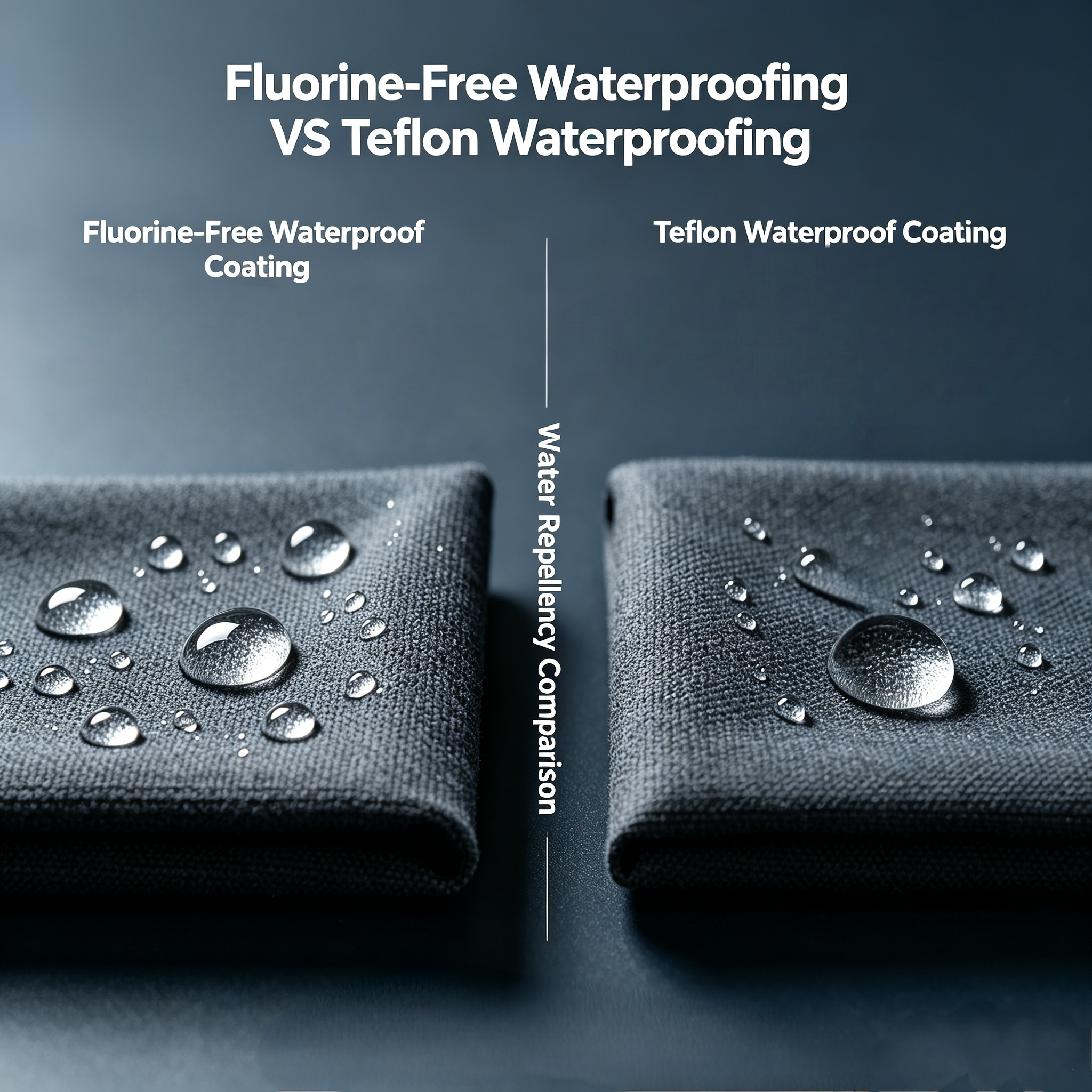
The industry faces tougher conditions in 2026–2027: PFAS environmental compliance is pushing the industry to phase out fluorinated waterproof coatings in favor of fluorine-free water repellent treatments. However, standard fluorine-free formulations have weaker resistance to salt spray and hydrolysis. Consequently, chalking, whitening and aging issues for coastal fabrics are more prominent than before. This remains a key challenge for the sector.

Suzhou Ruihe Textile & Technology Co.,Ltd
Copyright © Suzhou Ruihe Textile & Technology Co.,Ltd All Rights Reserved | Blog | Privacy Policy

 EN
 AR
 NL
 FR
 DE
 HI
 IT
 JA
 KO
 PT
 RU
 ES
 TL
 IW
 ID
 VI
 TH
 TR
 FA