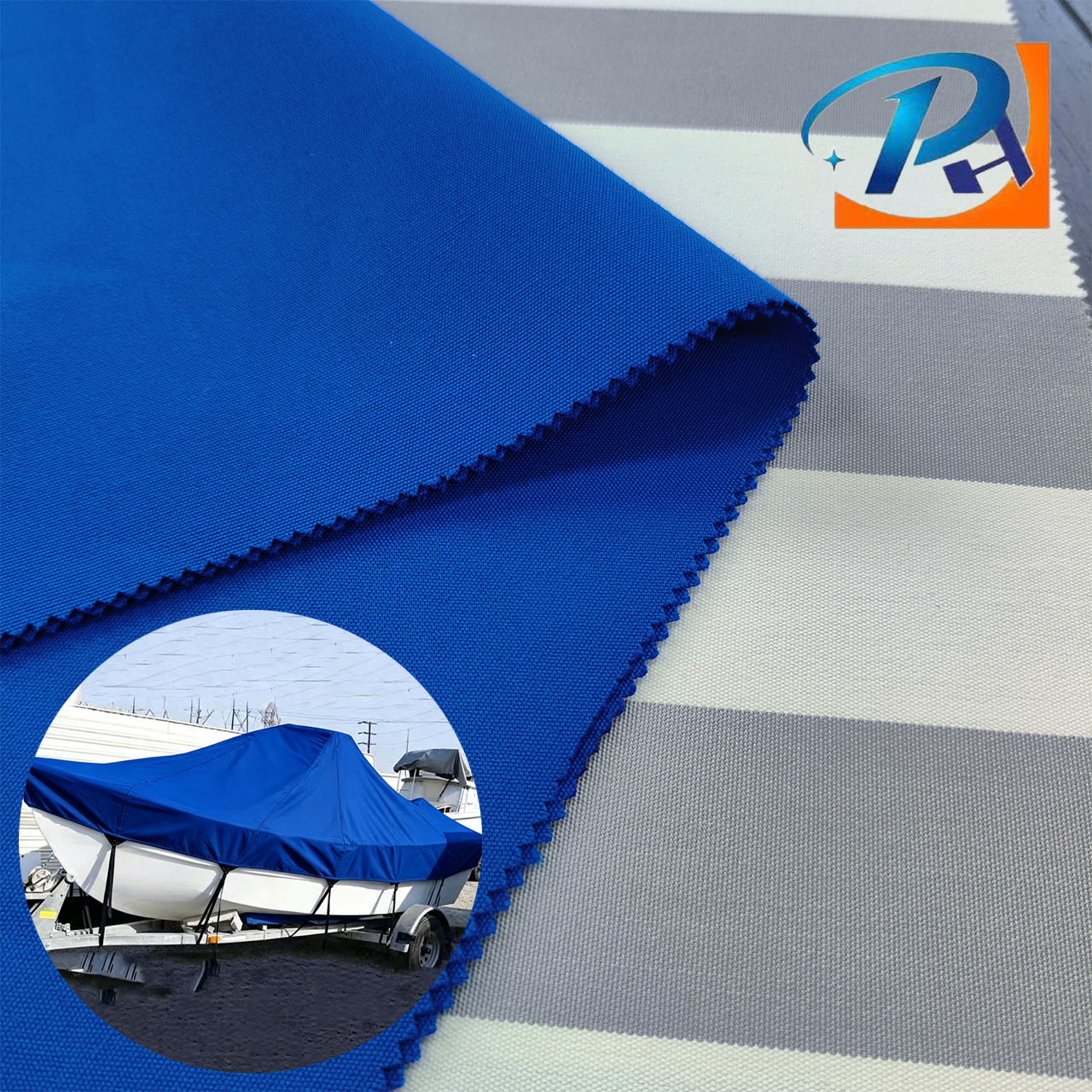
In the application of outdoor soft furnishings for homestays and commercial scenarios, a typical confusing phenomenon frequently occurs: dope-dyed outdoor fabrics rated Grade 7-8 in light fastness maintain stable color performance without fading or yellowing after long-term outdoor exposure, wind and rain erosion. However, local mottling and partial color fading often appear after mildew removal and deep cleaning. Such issues are frequently mistaken for product quality defects. In fact, the root cause lies in two completely independent color fastness systems of dope-dyed fabrics: light fastness and chemical resistance fastness. The two indicators operate independently and are not interchangeable.
Dope dyeing is a premium process for manufacturing sun-resistant outdoor fabrics and serves as the core technical advantage of our products. Centered on dope-dyed fabrics, this article elaborates on the essential differences between light fastness and chemical resistance fastness, clarifies that post-cleaning color fading is a scenario adaptation issue rather than a quality defect, and emphasizes standardized product labeling and standardized usage specifications to eliminate terminal cognitive deviations fundamentally.
I. Core Principle: Distinguish Two Independent Color Fastness Indicators to Break Cognitive Misconceptions
The biggest industry misconception regarding dope-dyed outdoor fabrics is equating high light fastness with universal cleaning resistance. In fact, fabric color fastness consists of two isolated evaluation systems. Light fastness corresponds to physical outdoor weathering resistance, while chemical resistance fastness targets artificial chemical cleaning. Governed by different fiber coloring mechanisms and applicable scenarios, the two performance grades cannot substitute for each other. This explains why dope-dyed fabrics withstand long-term sun exposure but may suffer local fading after chemical cleaning.
1. Core Characteristic of Dope-Dyed Fabrics: Premium Grade 7-8 Light Fastness
The core advantage of dope-dyed outdoor fabrics is inherent Grade 7-8 ultra-high light fastness, an intrinsic attribute derived from specialized manufacturing technology. Unlike post-dyed fabrics, dope dyeing incorporates color masterbatch during fiber formation, enabling full penetration of colorants throughout the fiber structure. Combined with high-temperature color fixation and setting processes, color molecules are firmly locked inside the fibers.
This process is specifically optimized to resist photoaging caused by ultraviolet radiation, high temperature, wind, rain, and alternating day-night temperatures. Therefore, the fabrics maintain stable color performance without overall fading or yellowing during long-term outdoor service, delivering superior durability and color stability for commercial and homestay outdoor scenarios.
It is critical to clarify that the process optimization of dope-dyed fabrics focuses entirely on outdoor light resistance and natural weathering resistance to prevent color degradation from solar radiation. Natural wind and rain erosion belongs to physical wear, whereas chemical cleaner corrosion causes chemical damage. The excellent light fastness of the fabric does not equivalently provide chemical cleaning resistance. This is a rational technical differentiation rather than a product defect.
2. Independent Performance of Dope-Dyed Fabrics: Chemical Resistance Fastness
Chemical resistance fastness is an exclusive performance system completely independent of light fastness and irrelevant to the sun-resistant mechanism of dope-dyed fabrics. It evaluates the fabric’s tolerance to artificial chemical reagents including acids, alkalis, oxidants, and mildew removers, assessing the adhesion stability of colorants on fibers under chemical corrosion.
Mildew removal and deep cleaning in commercial and homestay scenarios rely on strong oxidizing and alkaline chemical reagents to decompose stubborn stains. Such artificial chemical corrosion is not covered by the outdoor weathering performance of sun-resistant fabrics. To summarize explicitly: dope-dyed fabrics achieve outstanding anti-fading performance against solar radiation via inherent craftsmanship, while chemical cleaning resistance is a separate performance applicable to specific cleaning scenarios.
This perfectly explains the local fading characteristics: uniform sun exposure causes overall physical aging that the fabric can fully withstand; targeted spraying of high-concentration chemical reagents on mildew and heavy-stain areas leads to localized chemical corrosion, resulting in partial whitening and mottling. This mismatch between usage scenarios and core fabric performance is not a failure of light fastness.
3. Essential Differences Between the Two Color Fastness Indicators
For dope-dyed outdoor fabrics, the performance boundary is clear: Light fastness (physical weathering resistance) is the core product advantage. Supported by dope-dyeing technology, it adapts to long-term outdoor exposure and natural aging and serves as the core competitiveness of outdoor fabrics. Chemical resistance fastness (chemical corrosion resistance) is a scenario-specific performance for intensive artificial chemical cleaning and has no correlation or interoperability with light fastness. High light fastness does not equal universal chemical cleaning resistance — this is a universal industry principle for outdoor textiles.
II. Scenario-Specific Risk Analysis: Why Cleaning-Related Local Fading Concentrates in Commercial & Homestay Scenarios
Household outdoor fabrics involve low-frequency and gentle cleaning with negligible fading risks. In contrast, outdoor fabrics used in commercial and homestay scenarios (courtyard soft furnishings, terrace sunshades, outdoor seating, poolside fabrics) face harsh service conditions, leading to concentrated fading problems caused by stubborn stains and high-intensity professional cleaning.
1. Stubborn Stains Force the Use of High-Strength Mildew Removers
Outdoor environments for commercial and homestay projects feature high humidity, rapid dust accumulation, and coastal salt spray erosion, causing frequent growth of stubborn mildew, moss, and water stains. Conventional cleaning with water and neutral detergent cannot remove such persistent dirt. To restore fabric cleanliness and meet aesthetic requirements for commercial operation, cleaners often adopt high-efficiency chemical reagents including chlorine-based mildew removers, 84 disinfectant, hydrogen peroxide, and strong alkaline detergents — all typical corrosive agents for sun-resistant outdoor fabrics.
Concentrated chemical spraying on heavily stained areas causes localized permeation and corrosion of fiber colorants, resulting in irreversible partial color fading and mottling. Such chemical damage is permanent and non-repairable.
2. Non-Standard Commercial Cleaning Aggravates Fading
Commercial cleaning prioritizes efficiency, and three common irregular operations significantly accelerate fabric fading: undiluted direct spraying of stock solution that doubles chemical corrosiveness, long-time reagent soaking for thorough mildew removal that prolongs chemical corrosion, and hard-brush scrubbing that causes dual damage of chemical erosion and physical friction leading to colorant shedding.
Different from gentle household cleaning, the high-frequency and high-intensity cleaning mode in commercial scenarios directly triggers concentrated local fading of sun-resistant fabrics.
3. Cognitive Gaps Lead to After-Sales Disputes
Most after-sales misunderstandings stem from insufficient awareness of the dual-color-fastness characteristics of dope-dyed fabrics. End users generally assume that high light fastness allows arbitrary chemical cleaning while ignoring the independence of the two performance indicators. Accurate performance labeling and scenario specification for dope-dyed fabrics are the most effective way to eliminate after-sales disputes fundamentally.
III. Practical Solutions: Scenario Matching, Standardized Labeling and Regulated Cleaning
Based on the core craftsmanship and performance positioning of dope-dyed high sun-resistance fabrics, no modification is required for the core sun-resistant technology. All solutions focus on maximizing the inherent sun-resistant advantages and matching correct usage scenarios, mainly including standardized performance labeling and scenario-based regulated cleaning to eliminate cognitive deviations.
1. Precise Scenario Selection to Maximize Core Product Advantages
The core value of dope-dyed fabrics lies in superior outdoor sun resistance and weather durability, making them the preferred choice for open-air commercial and homestay scenarios. Based on its dual-color-fastness characteristics, targeted scenario adaptation avoids improper application:
Conventional household and general commercial outdoor scenarios with natural aging and mild water cleaning are fully applicable to dope-dyed high sun-resistance fabrics, ensuring long-term color stability and cost performance.
For harsh scenarios requiring frequent intensive chemical cleaning, end users shall be informed of fabric performance characteristics in advance, and standardized cleaning methods shall be adopted to avoid corrosive reagents, so as to maximize fabric service life and sun-resistant performance.
2. Improve Product Labeling to Clarify Performance Boundaries
Standardized and transparent product labeling is the optimal solution to eliminate after-sales cognitive misunderstandings. The performance advantages, attribute boundaries and usage prohibitions of dope-dyed fabrics shall be clearly marked on hangers, product specifications and supply documents to bridge information gaps and avoid misuse.
(1) Core Performance Labeling: Highlight core advantages — “This dope-dyed outdoor fabric features Grade 7-8 light fastness, inherent UV resistance and excellent outdoor weather resistance, maintaining stable color without fading or yellowing during long-term open-air use.”
(2) Performance Boundary Labeling: Clearly specify — “Fabric light fastness and chemical cleaning resistance are independent indicators. Routine neutral cleaning ensures long-term color retention, while strong oxidizing and alkaline chemical reagents may cause color deviation.”
(3) Cleaning Prohibition Labeling: Explicitly list prohibited reagents (chlorine-based mildew removers, 84 disinfectant, bleach, strong alkaline detergents) and recommend standard cleaning methods to guide standardized operation.
3. Standardized Cleaning Specifications for Commercial Scenarios
A set of executable standardized cleaning procedures tailored for commercial and homestay operation teams balances cleaning effect and fabric maintenance, eliminating fading caused by improper operation:
(1) Routine Daily Cleaning: Wipe surface dust and light stains gently with clean water or neutral fabric detergent, followed by natural air drying with zero fading risk.
(2) Stubborn Mildew and Moss Cleaning: Replace chlorine-based bleaching mildew removers with chlorine-free neutral fabric-specific mildew cleaners. Dilute the detergent at a ratio of 1:50, spray gently, leave for 1-2 minutes to soften stains, wipe clean with soft cloth, and remove residual reagent with clean water.
(3) Strict Prohibited Operations: Forbid undiluted reagent spraying, long-time soaking, hard-brush violent scrubbing and high-temperature drying.
(4) Daily Maintenance: Conduct regular mild cleaning monthly to prevent long-term accumulation and aging of mildew and stains, reduce the use of high-strength chemical cleaners, and extend fabric service life.
IV. Conclusion
The local fading of dope-dyed outdoor fabrics after cleaning is a scenario adaptation problem caused by the independence of light fastness and chemical resistance fastness, rather than a product quality defect. The core value of dope-dyeing technology lies in creating Grade 7-8 premium sun resistance and outdoor aging resistance as the inherent core advantage, while chemical cleaning resistance is an independent scenario-based performance that is not bound to light fastness.
For commercial and homestay applications, transparent performance boundary labeling and standardized regulated cleaning enable end users to clearly distinguish the two color fastness indicators, eliminate cognitive misunderstandings, maximize the inherent high sun resistance and long-life advantages of dope-dyed fabrics, and completely avoid unnecessary after-sales disputes.


 EN
EN
 AR
AR
 NL
NL
 FR
FR
 DE
DE
 HI
HI
 IT
IT
 JA
JA
 KO
KO
 PT
PT
 RU
RU
 ES
ES
 TL
TL
 IW
IW
 ID
ID
 VI
VI
 TH
TH
 TR
TR
 FA
FA