
 EN
 AR
 NL
 FR
 DE
 HI
 IT
 JA
 KO
 PT
 RU
 ES
 TL
 IW
 ID
 VI
 TH
 TR
 FA
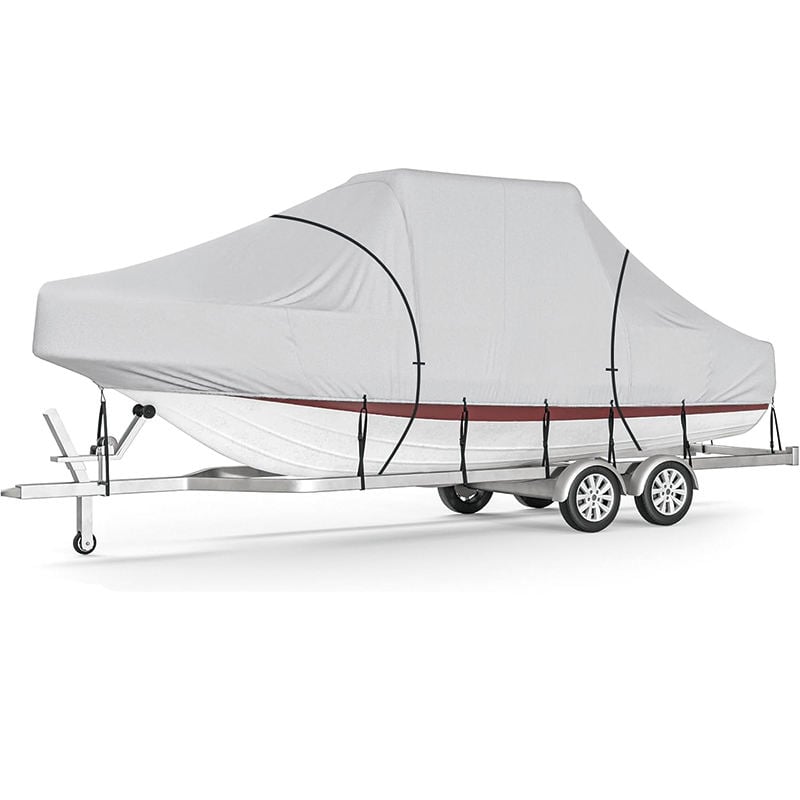
Many boat owners wonder: a brand-new boat cover looks sturdy at first, but after exposure to coastal conditions, it gradually fades to chalky white, feels rough, and may crumble when pulled. Most assume UV alone is the culprit.
Truth be told, UV radiation is a damaging factor, yet salt spray acts as the primary trigger and accelerator in marine coastal environments. Let’s break this down in technical but straightforward terms.
First, salt spray is not just seawater splashes. When seawater evaporates, invisible micro salt particles suspend in humid air. These particles settle firmly on fabric surfaces and penetrate tiny microcracks in the coating, and cannot be fully washed away by simple rinsing.
Step 1: Salt spray + moisture attacks the waterproof topcoat first
Boat cover fabrics, whether polyester or olefin, rely on the surface functional coating for water resistance and anti-aging performance. An intact coating serves as a protective barrier. Salt crystals are highly hygroscopic. Under sunlight, trapped salt particles absorb moisture and expand; during cool coastal nights, condensation enables further moisture absorption. Repeated expansion and contraction creates cyclic stress, slowly generating microcracks across the coating.
Once the coating cracks, salt spray reaches the base fabric directly. The visible “whitening” comes from two phenomena:
- Coating chalking: Combined attack from salt corrosion and UV breaks down the protective coating into fine white powder, which transfers onto your hands upon touch.
- Salt crystal deposits trapped within fabric interstices, forming cloudy white patches. Many users mistake this for limescale. Aggressive scrubbing accelerates coating loss and further degradation.
Key note: Aging progresses much slower under UV exposure alone. With salt spray present, aging is drastically accelerated. UV breaks molecular chains of fabric yarns; salt spray initiates coating failure. The combined effect delivers synergistic damage.
Step 2: Hidden damage from salt spray beyond surface whitening
Most boat owners think whitening is merely cosmetic. As long as it remains waterproof, the cover can stay in service. This is a common misconception.
- Fiber embrittlement: Once the coating fails, salt continuously erodes textile yarns. The fabric may look intact, yet loses tensile toughness. Strong coastal winds cause flapping motion, leading to unexpected tearing.
- Mold infestation: Salt spray maintains persistent humidity inside the fabric, creating favorable conditions for mold growth. Mold and salt deposits together speed up fabric degradation.
- Hardware corrosion: Grommets, zippers and tie-down fittings are vulnerable to salt-induced rust. Rust runoff stains the fabric permanently, and rust can wick through stitching holes into the fabric substrate.
Common Misconceptions
❌ Misconception 1: Heavy fabric guarantees salt spray resistance Fabric weight does not equal salt spray resistance. Heavy-weight fabric with standard coating and no anti-salt formulation will still chalk and whiten quickly. Salt spray resistance depends on base fiber material and functional coating, not just GSM.
❌ Misconception 2: High-pressure washing removes all salt High water pressure damages the topcoat. It can wash off surface salt, but residual salt trapped deep inside microcracks remains, accelerating coating cracking.
❌ Misconception 3: Whitening is just dirt that can be cleaned away Whitening = irreversible coating chalking. Damaged protective layer cannot be restored by cleaning; maintenance can only slow further deterioration.
Practical Recommendations for Boat Owners
- Prioritize fabrics formulated for salt spray resistance. Solution Dyed yarns embed pigment into fiber during extrusion (not post-dyed on fabric surface), delivering superior UV stability and resistance against salt-induced chalking. Pair with marine-grade anti-salt coating for long coastal service life.
- Periodic gentle maintenance: Clean with neutral detergent and low-pressure rinse. Avoid hard scrubbing. Ensure full drying before reinstalling the cover. Wrapping the boat while damp multiplies aging from salt + trapped moisture.
- Loosen the cover during off-season storage. Continuous high tension amplifies cyclic stress from salt expansion/contraction and cracks the coating faster.
- Localized whitening is an early warning sign. It indicates coating degradation. Take maintenance measures early to prevent sudden cover failure and hull scratches.
Summary
UV provides continuous long-term degradation. Salt spray breaks through the protective barrier first. Salt crystals penetrate micro gaps; cyclic expansion and contraction split waterproof coating and trigger chalking whitening. Then UV attacks yarn fibers directly. The dual attack drastically shortens the service life of marine boat covers.