
 EN
EN
 AR
AR
 NL
NL
 FR
FR
 DE
DE
 HI
HI
 IT
IT
 JA
JA
 KO
KO
 PT
PT
 RU
RU
 ES
ES
 TL
TL
 IW
IW
 ID
ID
 VI
VI
 TH
TH
 TR
TR
 FA
FA
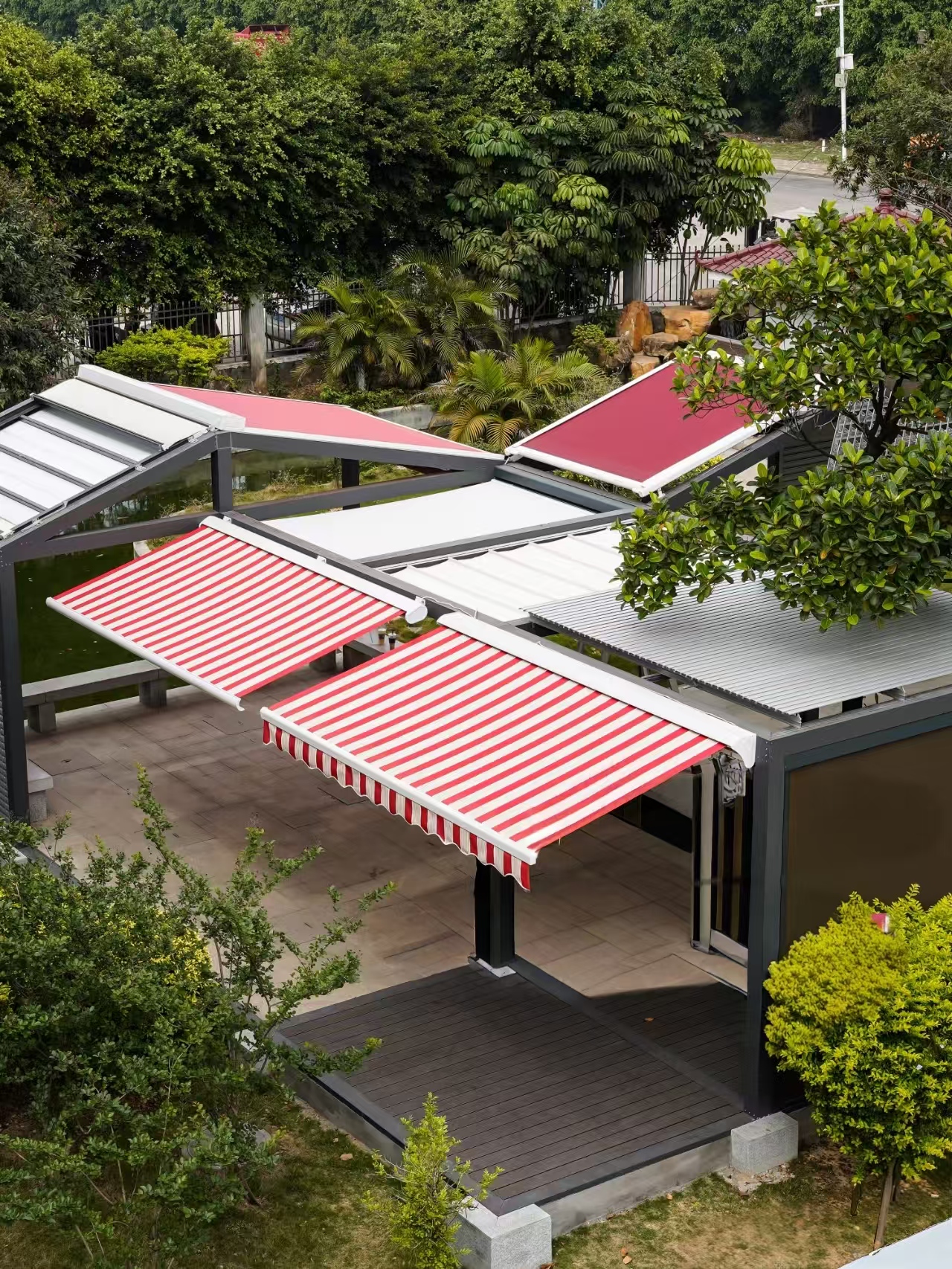
In the engineering application and later maintenance of outdoor awnings, patio umbrella fabrics and outdoor furniture fabrics, there is a deceptive “abnormal phenomenon” that has long troubled purchasers and engineering teams. Many outdoor fabrics are certified Grade 7-8 in light fastness and perform equally well under continuous sunlight exposure, maintaining stable color without fading or yellowing in dry sunny environments. However, significant differences emerge in rainy and humid seasons. Ordinary high UV-resistant fabrics are prone to moisture whitening, damp discoloration and rain-stained mottling, leaving permanent color differences after drying and seriously damaging the overall project appearance. In contrast, dope-dyed fabrics maintain uniform and stable color even under long-term rain infiltration and humid stuffy conditions, with almost no rainy-season fading.
A common industry misconception assumes that fabric fading is solely caused by sunlight exposure, and that high light fastness guarantees universal outdoor stability. Based on years of in-depth experience in outdoor fabric R&D and engineering implementation, we conclude that rainy-season moisture fading acts as an invisible touchstone that distinguishes conventional fabrics from high-end dope-dyed products, exposing the inherent process defects of many parameter-qualified fabrics.
I. Industry Pain Point: UV Resistance Is Easy, While Humid Weather Stability Defines Commercial-Grade Quality
Currently, light fastness is regarded as the core or even the sole evaluation standard for outdoor fabric procurement. Fabrics with Grade 7-8 test reports are generally recognized as high-quality weather-resistant materials. Nevertheless, commercial outdoor scenarios are far more complex than simple sun exposure. Especially in southern plum rain zones and coastal rainy areas, fabrics endure prolonged humidity, rain soaking, alternating dry-wet cycles and enclosed damp conditions throughout the year.
Numerous commercial awning and outdoor soft furnishing projects reflect that many fabrics survive intense ultraviolet radiation in summer but fail in humid rainy seasons. Conventional high UV-resistant fabrics suffer irreversible mottling, partial whitening and dull discoloration after rainfall. Such damp-induced fading cannot be restored by cleaning or maintenance, resulting in repeated replacement, higher operational costs and increased after-sales pressure. By comparison, dope-dyed fabrics perfectly adapt to humid and rainy conditions and sustain stable color retention during repeated dry-wet cycles, making them the preferred choice for commercial outdoor projects in high-humidity regions.
II. Core Cognitive Misconceptions: Misunderstood Causes of Outdoor Fabric Fading
Based on long-term market service experience, we summarize two critical industry misconceptions that account for most rainy-season fabric failures:
First, the misunderstanding that fading is only triggered by UV radiation. Most purchasers believe high light fastness equals all-weather stability. In fact, ultraviolet rays only cause slow and uniform photoaging fading. By contrast, high humidity, rain penetration and damp oxidation in rainy seasons lead to dye hydrolysis and interlayer peeling, resulting in sudden, partial and irreversible mottled discoloration — an entirely different damage mechanism independent of solar photoaging.
Second, the misunderstanding that equal UV resistance means equal color retention. Ordinary post-dyed fabrics can achieve Grade 7-8 light fastness via auxiliary agents and surface color fixation treatments. However, such parameter compliance is purposefully optimized for sunlight resistance only. These fabrics feature poor inherent hydrolysis resistance and humidity stability, and their surface fixation structure easily fails under alternating dry and wet conditions, leading to inevitable rainy-season discoloration.
III. Fundamental Principle: Seasonal Color Stability Gap Stemming From Inherent Process Differences
Despite identical Grade 7-8 UV resistance ratings, the dramatic difference in humid-season color stability originates from fundamentally different coloring mechanisms and fiber bonding structures, which determine the ultimate weather resistance of fabrics from the production stage.
Conventional post-dyed fabrics adopt the grey fabric post-dyeing process. The white grey fabric is woven first, then dyed and fixed at high temperature. Colorants only attach to the fiber surface and rely on external fixing agents for adhesion. This surface coloring structure is exclusively optimized for anti-UV performance. In humid rainy environments, rainwater penetrates the surface layer, continuous humidity weakens the adhesion of fixing agents, and surface dyes gradually hydrolyze and peel off, eventually causing moisture whitening, rain mottling and partial fading. Simply put, such fabrics are UV-resistant on the surface but vulnerable to humidity and hydrolysis.
Dope-dyed fabrics adopt the in-fiber melt coloring process. During fiber melt forming, color masterbatch particles are fully fused with raw materials to form an integrated structure. Color penetrates the entire fiber with uniform internal and external chromaticity. Dye molecules are deeply embedded in the fiber molecular chain, with no surface floating color, no post-coating and no reliance on chemical fixatives. This integrated structure not only resists UV photoaging, but also delivers excellent resistance to hydrolysis, dampness and dry-wet cycling. Even under prolonged rain infiltration and humid exposure, dyes remain stably bonded without hydrolysis or shedding, fundamentally eliminating rainy-season moisture fading and residual stains.